Shoot for Your Goals: A Designer’s Embroidery Review
As a designer who spends more time staring at stitch simulations than I care to admit, I have learned that not every graphic translates well into thread. We see thousands of digital files marketed toward crafters, but few stand up to the mechanical realities of an embroidery machine. When I first pulled up Shoot for Your Goals, my initial reaction was one of cautious optimism. It is listed under Crafts and Graphics, targeting the soccer niche, but does it hold up when you actually hoop it up? I decided to put this design through its paces, evaluating it not just as a pretty picture on a screen, but as a viable asset for real-world production.
First Impressions and Visual Personality
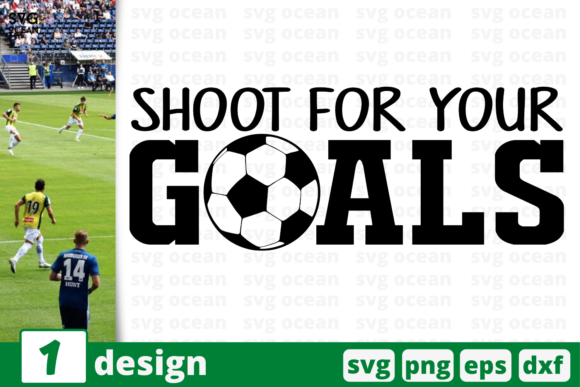
The immediate mood of Shoot for Your Goals is energetic and motivational. The typography suggests movement, which aligns perfectly with the dynamic nature of soccer. For an embroidery designer, the first thing we look for is clarity. Does the layout breathe? Are the elements balanced? In this case, the design avoids the cluttered look that plagues many sports-themed graphics. The visual personality is clean enough to be readable from a distance, which is crucial for apparel like sweatshirts or tote bags where the viewer might be ten feet away.
The theme is universal enough to appeal to a broad audience, from youth league players to dedicated fans. However, the true test lies in how these shapes convert to stitches. Sharp angles in vector graphics can sometimes result in jagged edges if the digitizing isn’t precise. My review focuses on whether the transition from the SVG format to a stitched reality maintains that crisp, professional edge we all strive for in our handmade products.
Real-World Application: The Custom Sweatshirt Test
To truly evaluate Shoot for Your Goals, I imagined a specific client scenario. A local soccer mom wanted custom hoodies for her daughter’s team end-of-season gift. She needed something that looked boutique-quality, not like a mass-produced uniform. This is where the design shines. Placed on the left chest or centered on the back, the quote serves as a strong focal point.
When working with custom apparel like fleece or cotton blends, the density of the design matters. If the letters are too thin, they get lost in the fabric pile. If they are too dense, the garment puckers. Based on the structure of this graphic, it appears suitable for a standard fill stitch approach for the larger elements, potentially using a satin stitch for borders or smaller accents. The result on a medium-weight sweatshirt fabric would likely be robust and tactile, giving the wearer a sense of quality. It transforms a simple piece of clothing into a cherished personalized gift that commemorates a season of hard work.
Versatility Across Product Lines
Beyond apparel, I considered how this design performs on other substrates. For an embroidered patch, the design would need to be scaled carefully to ensure the text remains legible. Patches often require higher stitch density to cover the backing material completely, so testing is essential. On a canvas tote bag design, the rugged texture of the fabric pairs well with bold typography. The contrast between the thread and the natural canvas creates a rustic, artisanal look that sells well at craft fairs.
For baby embroidery projects, such as a onesie or a nursery decor item, the scale must be reduced significantly. Here, caution is advised. Small text can become illegible if the stitch count is too high for the tiny area. I would recommend testing a smaller version on scrap fabric to ensure the curves of the letters do not bunch up. Similarly, for holiday embroidery gifts, this design could be adapted with festive thread colors, moving away from traditional team colors to golds, silvers, or reds, making it a versatile asset for seasonal sales.
Technical Considerations and Potential Pitfalls
While Shoot for Your Goals has strong aesthetic potential, there are areas where a designer must exercise judgment. The product description notes that the download includes SVG, DXF, PNG, and EPS formats. It explicitly states these are for use with Cricut Design Space, Silhouette Designer Edition, and Make the Cut. This is a critical distinction for embroidery professionals.
Important Note: SVG and DXF files are vector graphics, not machine embroidery files (such as PES, DST, or JEF). You cannot directly load an SVG into most embroidery machines. To use this design for stitching, you must either digitize it yourself using embroidery software or convert it using specialized auto-digitizing tools, keeping in mind that auto-digitizing often requires significant manual editing to achieve professional results. Always check the license terms to ensure you are permitted to create derivative embroidery works for commercial sale.
When converting this graphic for embroidery, pay close attention to stitch density. Soccer-themed designs often feature balls or nets, which can be tricky. If this specific iteration includes such icons, ensure they are simplified. Complex details in small hoop sizes can lead to thread breaks and needle deflection. For curved surfaces like caps, the design should be arched digitally before stitching to prevent distortion. On stretchy fabrics, a cut-away stabilizer is non-negotiable to maintain the integrity of the lettering after washing.
Enhancing Brand Value and Customer Trust
For Etsy sellers and small shop owners, the quality of your design assets directly impacts your brand consistency. Using a well-balanced graphic like Shoot for Your Goals signals professionalism. When customers see clean lines and proper spacing, they trust the durability of the product. It elevates the perceived value of the finished product, allowing you to command a higher price point.
Moreover, the versatility of the design allows for cohesive marketing. You can use the same graphic for a printable mockup on your website and then produce the actual embroidered item. This consistency across digital and physical touchpoints strengthens brand recognition. Whether you are selling design assets to other crafters or finished goods to consumers, the clarity of the message "Shoot for Your Goals" resonates emotionally, driving buyer engagement.
Practical Designer Notes for Execution
Before running a full production batch, follow these steps to ensure success with this design:
- Test on Scrap Fabric: Always stitch out a sample on the exact fabric type you plan to use. Check for puckering or registration issues.
- Check Thread Contrast: High contrast between thread and fabric ensures readability. Test light threads on dark fabrics and vice versa.
- Review Stabilizer Choice: Use tear-away for stable woven fabrics and cut-away for knits or stretchy materials to support the stitch structure.
- Inspect Small Details: Zoom in on your digitized version. Ensure no stitches are too close together, which can cause thread buildup.
- Confirm Licensing: Since the source file is a graphic format, verify that your intended use for commercial embroidery complies with the creator's terms.
- Mockup in Black and White: This helps identify value issues. If the design disappears in grayscale, it may lack sufficient contrast or detail definition.
In conclusion, Shoot for Your Goals is a promising graphic for those willing to invest the time in proper digitization or conversion. It offers a motivational message with a clean aesthetic that fits well within the sports and lifestyle markets. By understanding the technical requirements and respecting the limitations of vector-to-stitch conversion, designers can leverage this asset to create high-quality, commercially viable embroidery projects. It is a solid choice for anyone looking to add a touch of inspiration to their craft business inventory, provided the technical bridge between graphic and thread is managed with care.