Reviewing the Beer Doesn t Make You Fat Quote for Embroidery
As an experienced designer who has spent countless hours digitizing and stitching out machine embroidery design files, I approach every new asset with a critical eye. It is not just about whether the image looks cute on a screen; it is about how it translates to thread, how it behaves on fabric, and whether it adds genuine value to a handmade product. Recently, I evaluated the Beer Doesn t Make You Fat Quote to determine its viability for real-world projects. This piece of digital art falls under the broader categories of Crafts and Graphics, but its application in embroidery requires specific technical consideration.
First Impressions and Visual Personality
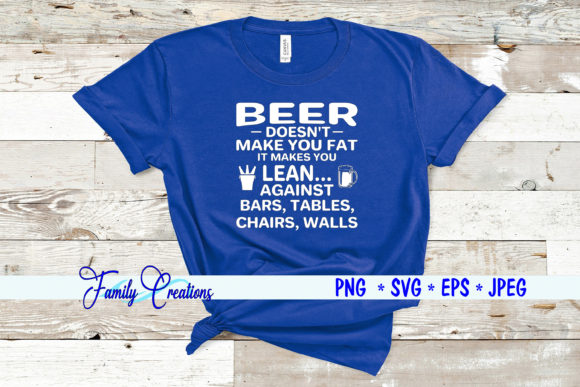
The immediate appeal of the Beer Doesn t Make You Fat Quote lies in its humor and relatability. The phrase, "Beer Doesn t Make You Fat. It makes you lean...agains bars, tables, chairs, walls," taps into a casual, self-deprecating wit that resonates with a wide audience. From a design perspective, the layout is typically typographic, relying on font choice and arrangement to carry the visual weight. When reviewing this as a potential embroidery file, I look for clarity in the letterforms. Typography-based designs can be tricky; if the fonts are too thin or intricate, they may not stitch out cleanly without significant digitizing adjustments.
The mood created by this design is lighthearted and social. It does not take itself seriously, which makes it an excellent candidate for casual wear and home goods. However, the success of the design depends heavily on the quality of the underlying design assets. If the original graphic uses complex gradients or shadows, these must be simplified for embroidery. Thread cannot replicate photo-realistic shading, so a good digital embroidery file will have already converted these elements into solid blocks of color or simple stitch patterns like satin stitch borders and fill stitch backgrounds.
Real-World Application: The Custom Tote Bag Scenario
To truly test the versatility of the Beer Doesn t Make You Fat Quote, I imagined a specific client project: a custom tote bag design for a local brewery’s promotional event. The goal was to create a durable, funny accessory that patrons would actually use. In this scenario, the design needs to be large enough to be readable from a distance but compact enough to fit within a standard hoop.
For a canvas tote, the texture of the fabric is coarse. This means the stitch density must be sufficient to cover the weave without pulling the fabric out of shape. If the quote is rendered in a single color, such as white or cream thread on a natural canvas, the contrast is high, ensuring readability. However, if the design includes multiple colors, I would advise using a running stitch for underlining to secure the fabric before applying heavier stitches. This prevents puckering, a common issue when embroidering on unlined bags. The humorous nature of the quote makes it a conversation starter, enhancing the perceived value of the finished product beyond its material cost.
Apparel and Personalized Gifts
Beyond tote bags, this design shines in custom apparel. Imagine it stitched onto the back of a denim jacket or the chest of a casual t-shirt. For sweatshirt embroidery, the plush texture of the fleece provides a forgiving background. The thick fabric can support higher stitch densities, allowing for bolder lettering. Here, the Beer Doesn t Make You Fat Quote becomes a statement piece. It works exceptionally well as a personalized gift for birthdays, Father’s Day, or bachelor parties. The key is scaling. On a garment, the text must be legible without dominating the entire front panel. I recommend keeping the height between three and four inches for chest placements to maintain proportion.
For those running an Etsy seller shop or a small boutique, this type of humor sells. It appeals to buyers looking for unique, non-generic items. When listing such a product, using high-quality printable mockup images can help customers visualize the final look. However, nothing replaces a photo of the actual stitched item. Showing the texture of the thread against the fabric builds customer trust and demonstrates professionalism.
Technical Considerations and Fabric Constraints
While the concept is strong, the execution requires attention to detail. Not all fabrics are created equal. When working with thin or stretchy materials, such as jersey knits for t-shirts, stability is paramount. Using the correct stabilizer is non-negotiable. A cut-away stabilizer is often best for garments that will be washed frequently, as it provides lasting support. Without it, the weight of the thread can cause the fabric to pucker around the letters, ruining the clean lines of the quote.
Another critical factor is the hoop size. The length of the phrase "Beer Doesn t Make You Fat. It makes you lean...agains bars, tables, chairs, walls" is considerable. Designers must ensure that the entire text fits within the maximum hoop area of their machine. If the design is too long, it may need to be split into two separate hooping steps, which requires precise alignment skills. Misalignment here would break the flow of the joke and look unprofessional. Always check the dimensions of the embroidery project file before purchasing or downloading.
Dark fabrics present another challenge. If stitching light-colored thread on a black shirt, the background fabric might show through gaps in the stitching. To combat this, consider using an applique design technique where a piece of contrasting fabric is placed under the text, or increase the density of the fill stitches. Alternatively, outline the text with a thicker satin border to define the edges clearly against the dark background.
Commercial Viability and Licensing
For craft business owners and commercial embroidery professionals, understanding licensing is crucial. The product description notes that the design is provided in SVG format for use with cutting machines like Silhouette and Cricut. This indicates it is primarily a vector graphic. To use it for embroidery, one must either convert the SVG into an embroidery file using digitizing software or ensure that an embroidery-specific version (such as PES, DST, or EXP) is included. Selling finished items made from licensed designs often requires a commercial license. Always verify the terms of use provided by the creator. Using a design without proper clearance can lead to legal issues and damage your brand’s reputation.
Furthermore, the quality of the source file affects the final output. An SVG is scalable, which is great for resizing, but embroidery files have fixed parameters. If you are digitizing the SVG yourself, pay attention to thread colors and stitch direction. Changing the angle of the fill stitches can alter how light reflects off the thread, adding depth to the letters. Test different color combinations to see what offers the best visual impact. A monochrome look can be sophisticated, while multi-color threads can add a playful, vibrant energy suitable for holiday gifts or party favors.
Final Verdict and Designer Notes
The Beer Doesn t Make You Fat Quote is a viable and engaging design for various embroidery applications, provided it is handled with technical care. It fits naturally into the market for humorous, casual small shop product lines. To ensure success, follow these practical steps:
- Test on Scrap Fabric: Always stitch a sample on the same type of fabric you intend to use for the final product. This reveals issues with tension, density, and stabilization.
- Check Stitch Density: Ensure the design is not too dense for lightweight fabrics, which can cause stiffness and puckering.
- Verify Hoop Size: Confirm that the full length of the quote fits within your machine’s hoop capabilities to avoid complex multi-hoop alignments unless necessary.
- Contrast is Key: Choose thread colors that stand out against the fabric. High contrast improves readability and visual appeal.
- Review Licensing: Before selling any embroidered patch, towel, or shirt featuring this quote, confirm that your license permits commercial use of finished goods.
In conclusion, this design offers a fun, relatable element that can enhance a range of products from baby embroidery items (if adapted for a softer tone) to rugged bar towels. By focusing on proper technique and quality presentation, designers can turn this simple graphic into a profitable and popular item in their portfolio. Whether you are a hobbyist making gifts or a professional supplying design assets to others, the key lies in respecting the limitations of the medium while leveraging the strength of the message.